
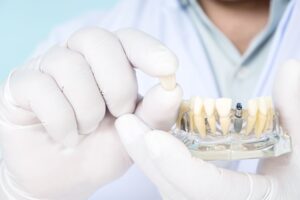
Are you seeking a long-term, reliable way to rebuild your smile after losing one or more adult teeth? If so, you might be a good candidate for dental implants. These replacement teeth are the only ones that involve placing a support post, often made from titanium, directly into your jaw. This usually makes them stronger and longer-lasting than dentures or dental bridges.
But it’s natural to have questions about the materials used for your prosthetics, and many people wonder why titanium is recommended. Continue reading to learn 3 benefits of supporting your new teeth with these resilient metal rods!
Benefit #1: It’s Biocompatible &
In the early 1900s, dentists often used stainless steel for dental implants because it is biocompatible, meaning the human body is unlikely to reject it. This made it an ideal option for rebuilding missing teeth until 1952, when Dr. Per-Ingvar Brånemark accidentally discovered that titanium fuses with bone more directly.
Unlike stainless steel, bone cells can adhere directly to and grow tightly onto titanium’s metal surface in a process called osseointegration. This makes these restorations a more permanent part of your mouth that are unlikely to cause allergies or sensitivity and are also unlikely to become destabilized or dislodged.
This also allows them to function more like natural teeth, which stimulate new jawbone growth with each bite down to preserve the foundation of your mouth and support your facial structure.
Benefit #2: It’s Strong and Lightweight
Titanium also has an incredible strength-to-weight ratio, making it an ideal material for dental implants. It’s about as strong as steel and can withstand an estimated 200 pounds of bite force or more without breaking, so it can potentially last through decades’ worth of daily biting and chewing.
However, it’s also nearly 45% lighter than steel, so it won’t weigh you down. This is essential to your ability to eat, speak, and smile comfortably after placement.
Benefit #3: It Resists Corrosion
Stainless steel contains iron, which forms rust when it interacts with oxygen and moisture. Unfortunately, that means implants made from this material can erode in the mouth. Meanwhile, titanium doesn’t contain iron, and it actually forms a protective barrier instead when it comes into contact with oxygen.
This helps shield it from damage caused by water, air, or harsh chemicals, meaning the material is unlikely to have an adverse reaction when used for oral implants.
If you have additional questions about why your dentist is recommending a titanium dental implant, they can provide more accurate information based on your unique circumstances and dental condition.
Meet the Author
Dr. Brent Whittaker is passionate about helping enhance patients’ lives by improving their dental health. He earned his dental degree from The Ohio State University College of Dentistry, and remains committed to continuing education to stay abreast of the latest treatment options and technology. Today, he works with local experts for accurate dental implant placement, then helps provide beautiful, lifelike restorations to improve your smile’s function and appearance after tooth loss. You can request an appointment on the website or call (740) 725-8000.